








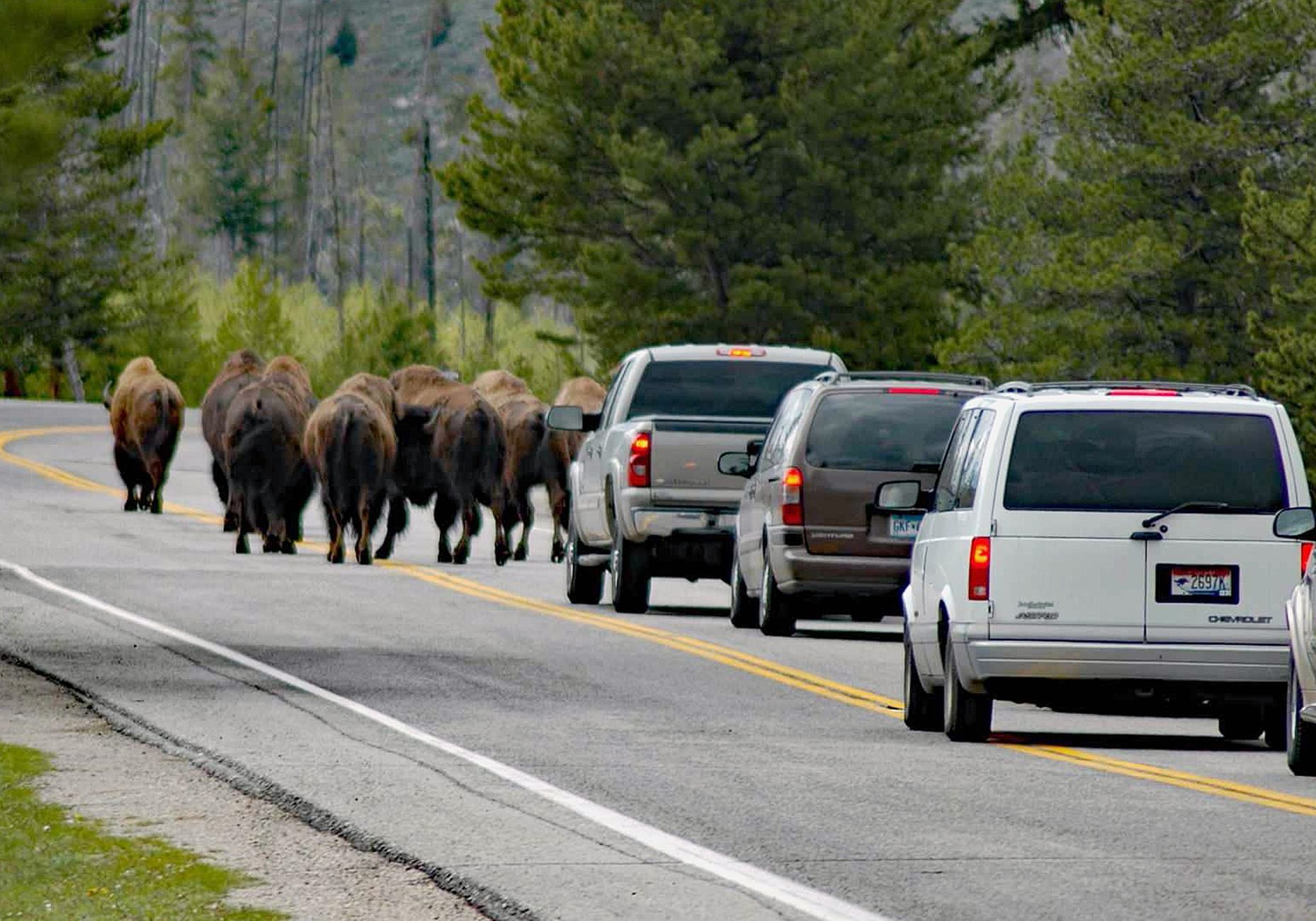
The Yellowstone bison encounter highlights a mechanic’s near-miss with a bull bison. Despite stopping to avoid hitting the animal, the bison charged and struck him, showcasing the unpredictable nature of wildlife in national parks.
Understanding Bison Behavior
Understanding the behavior of bison is crucial for anyone visiting Yellowstone National Park. These massive animals, often seen grazing peacefully, can become unpredictable if they feel threatened or cornered. During a recent incident, a mechanic encountered a bull bison while driving, attempting to stop safely to avoid a collision. Unfortunately, the bison charged at his vehicle, highlighting the unpredictable nature of these creatures.
Visitors should be aware of the following key points regarding bison encounters:
- Bison are wild animals: Always maintain a safe distance, ideally 25 yards or more.
- Avoid sudden movements: Quick actions can startle bison, provoking an aggressive response.
- Stay in your vehicle: The safest place during a bison encounter is inside your car.
Being informed about bison behavior can enhance safety during Yellowstone bison encounters.
What Happened During the Encounter
During the recent Yellowstone bison encounter, a mechanic’s attempt to avoid hitting a bull bison took an unexpected turn. As he slowed down his vehicle to give the massive animal space, the bison charged towards him instead. Witnesses described the scene as chaotic, with the bison seemingly unperturbed by the car’s presence.
The mechanic was quickly taken to a nearby hospital after sustaining injuries from the collision. Authorities remind visitors that bison can be unpredictable and should be given plenty of distance. This incident highlights the importance of understanding wildlife behavior, especially in areas like Yellowstone where human and animal interactions are common.
- Stay in your vehicle when encountering wildlife.
- Always keep a safe distance from bison.
- Be aware of your surroundings at all times.
Safety Tips for Wildlife Encounters
When encountering wildlife, particularly in places like Yellowstone, it is crucial to prioritize safety. Here are some essential tips for handling a Yellowstone bison encounter:
- Maintain Distance: Always observe bison from a safe distance, ideally at least 25 yards. Approaching them can provoke aggressive behavior.
- Stay Calm: If you find yourself too close to a bison, remain calm and avoid sudden movements. Bison can be unpredictable.
- Do Not Feed Them: Feeding wildlife alters their natural behaviors and can lead to dangerous encounters.
- Use a Vehicle as Shelter: If a bison approaches, staying inside your vehicle is often the safest option.
- Educate Yourself: Understanding bison behavior can help prevent dangerous situations during a Yellowstone bison encounter.
The Importance of Wildlife Awareness
Being aware of wildlife is crucial, especially in national parks like Yellowstone. Visitors often underestimate the unpredictability of animals such as bison, which can weigh over a thousand pounds and move surprisingly fast. A recent incident highlights the importance of exercising caution; a mechanic stopped his vehicle to avoid hitting a bull bison, only to have the bison charge at him instead. This Yellowstone bison encounter serves as a reminder that even seemingly safe actions can lead to dangerous situations.
To ensure a safe experience, it is essential to:
- Stay a safe distance from all wildlife.
- Observe animals from your vehicle whenever possible.
- Educate yourself about animal behavior before your visit.
By prioritizing wildlife awareness, visitors can help protect both themselves and the animals they admire.
Photo by cheryl brigham on Pexels